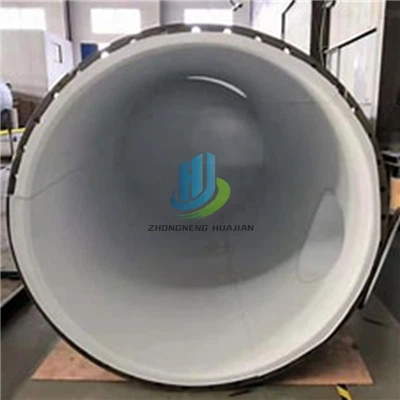
A Horizontal LNG Storage Tank is a modular, transportable cryogenic storage solution ideal for LNG satellite stations, fueling depots, and industrial end-user sites. Its horizontal, skid-mounted or modular design facilitates easier transportation, faster installation, and scalability, providing a flexible and efficient means to store and vaporize LNG for local distribution, vehicle fueling, or process use.
The project was an LNG vehicle fueling station for a long-haul trucking depot, right off the interstate. The client's main question wasn't about technology; it was about time. "How fast can I be fueling trucks?" The answer was a horizontal LNG tank. This is the workhorse of distributed, small-to-mid-scale LNG. Where the vertical tank is a permanent landmark, the horizontal tank is a deployable asset. It arrives on the back of a truck, not in a thousand construction deliveries.
The logic is all about logistics and scalability.
These tanks are factory-fabricated in standard sizes-50, 100, 150 cubic meters-in controlled environments. They're pressure vessels, built to ASME code, with vacuum powder insulation (like a giant Dewar flask) or high-performance foam. Because they're horizontal, they can be shipped on standard heavy-haul trailers. I've seen them travel from a factory in the Midwest to a mining site in Alaska, by road and barge. When they arrive on site, they're essentially complete. The installation is about setting them on a simple concrete beam foundation, connecting the pipe racks (which often come pre-assembled), and hooking up power and instrumentation. From empty lot to holding LNG, we've done it in under three weeks. For a truck stop owner, that's three weeks of lost revenue turned into three weeks of gained revenue.

The horizontal orientation creates a different set of operating characteristics.
The liquid surface area is larger relative to the volume compared to a vertical tank. This means the Boil-Off Gas (BOG) rate can be slightly higher, but for a fueling station, that's often a feature, not a bug. That BOG is the station's own fuel source for the vaporizers that turn LNG back into gas for the trucks. The system is designed to use that evaporation. The tanks are often paired in "twin packs" or banks. Need more capacity? Pour another foundation slab and bolt down another identical tank. It's modular growth. This is why you see them at industrial plants using LNG as a feed stock or fuel-they can start with one tank and add more as production scales.
There's a misconception that horizontal means "less safe." The opposite is often true in their context. Their lower center of gravity makes them more stable. The secondary containment is integral-the outer jacket is part of the delivered unit. The dike wall required is much smaller, often just a low curb. For a public-facing location like a fueling station, this creates a much less imposing, safer footprint. Maintenance is also simpler. All the valves, the pressure build-up coil, the level gauges, are accessible from a single grade-level platform. There's no need for high platforms or complex access systems.
The real engineering secret is in the "bottom." In a vertical tank, you draw from the very bottom. In a horizontal tank, the pump is mounted in a sump, a deep well at one end. This ensures you can always pump out nearly every last liter, even if the tank isn't perfectly level. The fill connection is at the opposite end. This creates a natural, gentle circulation during filling, which helps prevent stratification. For a station that might receive a truck delivery every other day, this constant gentle mixing is beneficial.
Choosing horizontal over vertical is a decision about philosophy. Are you building a cathedral of gas, or are you setting up a service station? Are you locking in capacity for 30 years, or do you need the option to pick up and move this asset in five? The horizontal LNG tank is for the pragmatist, the distributor, the entrepreneur. It brings the gas to where the demand is, quickly and without ceremony, and gets on with the job of powering something else.
Technical specification
|
No. |
Specification Model |
Overall Dimensions |
Weight (Kg) |
Remarks |
|
1 |
CFW-5/0.8 |
φ1916 × 4572 |
3900 |
Saddle Support |
|
2 |
CFW-10/0.8 |
φ2316 × 5398 |
5500 |
Saddle Support |
|
3 |
CFW-15/0.8 |
φ2316 × 7258 |
7800 |
Saddle Support |
|
4 |
CFW-20/0.8 |
φ2416 × 8456 |
9100 |
Saddle Support |
|
5 |
CFW-30/0.82 |
φ2916 × 8289 |
12200 |
Saddle Support |
|
6 |
CFW-30/1.44 |
φ3016 × 7969 |
14200 |
Saddle Support |
|
7 |
CFW-50/0.82 |
φ2916 × 12729 |
17800 |
Saddle Support |
|
8 |
CFW-60/0.82 |
φ2916 × 14929 |
20900 |
Saddle Support |
|
9 |
CFW-60/0.8 |
φ3216 × 12135 |
20300 |
Saddle Support |
|
10 |
CFW-60/1.44 |
φ3020 × 14325 |
24400 |
Saddle Support |
|
11 |
CFW-70/0.8 |
φ3216 × 13885 |
22400 |
Saddle Support |
|
12 |
CFW-75/0.8 |
φ3216 × 14785 |
23600 |
Saddle Support |
|
13 |
CFW-100/0.8 |
φ3420 × 16918 |
33600 |
Saddle Support |
|
14 |
CFW-100/0.8 |
φ3520 × 15902 |
33200 |
Saddle Support |
|
15 |
CFW-120/0.8 |
φ3824 × 15926 |
41800 |
Saddle Support |
|
16 |
CFW-150/0.8 |
φ3824 × 19426 |
50500 |
Saddle Support |
|
17 |
CFW-200/0.8 |
φ4028 × 22955 |
64900 |
Saddle Support |
Hot Tags: horizontal lng storage tank, China horizontal lng storage tank manufacturers, suppliers, LNG liquefaction storage tank, LNG ship fuel tank